

Edmond’s automated license plate reader program began as a temporary pilot in 2023. Less than three years later, the system is no longer experimental, and the public record shows the technology has become part of Edmond’s public-safety infrastructure.
The city has used Flock Safety cameras in public areas, renewed its contract, considered additional license plate readers, and approved a mobile camera trailer for large events. Police have described the technology as a tool that can help identify stolen vehicles, wanted vehicles, missing people, and vehicles tied to AMBER or Silver Alerts.
The public record also leaves several basic questions unanswered, including how many Flock devices are active today, where all city-owned cameras are located, which outside agencies can access Edmond’s data, how often officers search the system, and what measurable public-safety outcomes have resulted from the alerts. Those unanswered questions are central because the system collects information from vehicles moving through the city, including vehicles driven by people who are not suspected of any crime.
Why it matters
Flock cameras identify vehicles linked to stolen cars and other law enforcement alerts. They also scan license plates and vehicle characteristics from vehicles that pass by them, including vehicles driven by people who are not suspected of any crime.
That makes the central question bigger than whether the cameras work. The question is whether Edmond residents have enough public information to understand how the system is being used, how access is controlled, and whether the results justify the scale of data being collected.
How Edmond’s program started
The City of Edmond announced in May 2023 that it would conduct a 60-day automated license plate reader pilot program that summer. At the time, the city said the system was designed to capture license plates and vehicle characteristics, not people or faces.
The cameras were expected to help officers identify vehicles connected to stolen or wanted vehicles, wanted persons, missing persons, AMBER Alerts, and Silver Alerts. The pilot did not remain a one-time test.
By April 2024, Edmond Police had contracted with Flock Safety for 10 automated license plate readers and software access. NonDoc reported the city paid Flock $31,000 in 2023 for the initial program.
That month, Police Chief J.D. Younger was scheduled to ask the Edmond City Council to renew the Flock contract for another year and purchase four additional ALPRs at a total cost of $46,450. The reviewed source confirms the request, though not the final vote outcome.
What the cameras collect
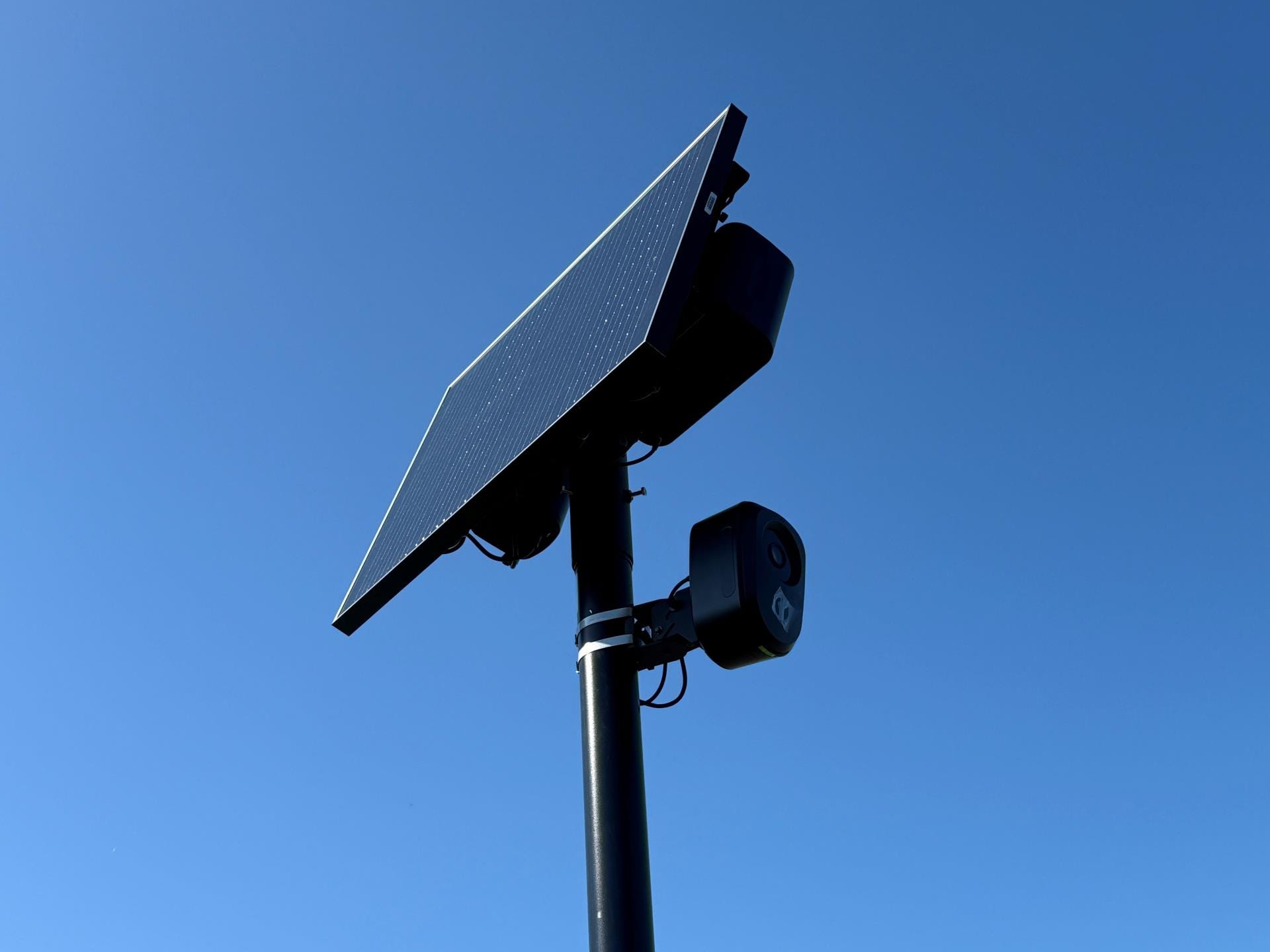
Flock cameras are automated license plate readers, commonly called ALPRs. They capture images of vehicles, read license plates, and identify vehicle characteristics.
In Edmond, Younger told NonDoc the cameras can provide general vehicle descriptions, including color and bumper stickers. The cameras compare captured plates against law-enforcement databases and “hotlists,” and a match can produce an alert for officers.
Younger told NonDoc that a Flock hotlist hit does not constitute probable cause by itself, describing it instead as reasonable suspicion that requires human follow-up. That means the technology can alert police to a vehicle of interest, while the alert itself does not establish that the driver committed a crime.
What officials say the system is for
Edmond officials have presented the system as an investigative and public-safety tool. The city’s 2023 pilot announcement tied the cameras to stolen vehicles, wanted vehicles, wanted persons, missing persons, and emergency alerts.
The system is not described in the reviewed sources as a traffic-enforcement tool. That distinction matters because the public debate is not about speeding tickets or red-light cameras; it is about whether a city should collect searchable vehicle-location data, how long that data should be kept, and who should be allowed to access it.
A mobile trailer adds a new question
In November 2025, KOCO reported that Edmond City Council unanimously approved a $35,400 request for a Flock camera trailer to be used for security at large events. Younger said the city intended to use it at events with large crowds, including Heard on Hurd, LibertyFest, and Luminance.
That purchase adds a new dimension to Edmond’s use of the technology. Fixed cameras monitor selected roadways, while a trailer can move from place to place, including to large public gatherings.
The available public reporting does not show whether Edmond plans to publicly log when and where the trailer is deployed, how long it operates, how many plates it scans during events, or how many alerts result from those deployments. Those details matter because a mobile system can be used differently than fixed cameras in public rights-of-way.
The transparency gap
Edmond does provide some public-facing information about its Flock system. The Edmond Police Department website links to a license plate reader transparency portal, giving residents a way to see at least some information about the program.
Prior reporting shows limits to what the public can see. NonDoc reported in April 2024 that Edmond denied a request for the locations of its 10 ALPR cameras, citing Oklahoma Open Records Act exemptions related to public safety and terrorism-prevention records.
NonDoc also reported that Edmond denied a request asking which other agencies Edmond Police allows to access its cameras. That leaves residents with a partial picture of a system that collects vehicle-location data on public roads.
The public record confirms Edmond uses Flock cameras. It confirms the system began as a pilot, continued through a paid contract, was considered for expansion, and later added a mobile trailer.
The public record reviewed for this story does not fully show where the city-owned cameras are, which agencies can access Edmond’s data, or how often the system is searched. Those gaps limit residents’ ability to evaluate the system from the outside.
The numbers need context
The available numbers raise another question: what do Flock alerts actually produce? NonDoc reported that Edmond’s Flock transparency portal showed more than 314,000 vehicle scans in one 30-day period as of April 5, 2024.
During that same period, the system showed two hotlist hits. That was a sharp drop from the 60-day trial period, when Younger said the department received 107 hotlist hits, according to NonDoc.
The available sources reviewed for this story do not fully explain the difference. It is unclear from the public record whether the change reflects camera location, hotlist settings, a changed definition of “hit,” outside-agency sharing, a different reporting window, or another factor.
It is also unclear how many hits resulted in arrests, recovered vehicles, missing-person recoveries, criminal charges, or closed cases. A high number of scans does not necessarily prove success, a high number of hits does not by itself show outcomes, and a low number of hits does not necessarily mean the tool has no value.
Without consistent public reporting on scans, searches, hits, and outcomes, residents are left without enough information to judge the system’s effectiveness. The figures available now show activity, while the public record does not fully show results.
Retention and safeguards
The public record does show some guardrails. NonDoc reported that Edmond’s Flock records are deleted after 30 days unless images are retained for an investigation.
If images are determined to be evidence, they can be kept through the related adjudication process. Younger also told NonDoc that officers are trained before using the system and that audit logs track activity.
He said officers must identify themselves and state why they are using the system. Those safeguards are important, although the public record reviewed for this story does not show how often audits are reviewed, whether audit findings are reported to city leadership, whether any misuse has occurred, or whether any employee has been disciplined or retrained for improper access.
That means the system’s oversight still depends largely on internal controls that residents cannot fully evaluate from the outside. The available record shows that safeguards exist, while leaving their use and results less visible.
An open-source effort to add visibility
Official information about camera locations is limited, so some residents have turned to open-source tools such as DeFlock to better understand where automated license plate readers may be located. DeFlock is a volunteer-driven project that maps reported ALPR cameras, including Flock-style cameras.
The map is not an official city inventory, though it can give residents a place to start when trying to understand where these systems may exist in the community. A camera appearing on DeFlock does not necessarily mean it is owned by Edmond Police, active, located within Edmond city limits, or accessible to law enforcement.
The existence of the map points to a larger transparency issue. Without a public inventory, residents have few ways to distinguish city-owned cameras from private cameras, inactive cameras, or cameras operated by another jurisdiction.
For residents trying to understand the scale of license plate reader use in Edmond, DeFlock is not the final answer. It is one of the few public places to begin looking.
The larger Oklahoma conversation
Edmond’s use of Flock is unfolding as Oklahoma City faces its own debate over the same technology. KOSU reported March 23, 2026, that a records request found Oklahoma City lacked specific transparency reporting rules for automatic license plate readers, Flock-specific internal-use policies, and Flock-specific discipline standards for misuse.
A later KOSU story reported Oklahoma City could vote on its third Flock renewal as soon as July 7, 2026. That timing matters for Edmond because the same basic questions apply here: what rules govern use, who can access the system, how searches are audited, and what information residents can see without filing records requests.
The debate has also produced a more visible national backlash. TechCrunch reported in February 2026 that Flock cameras had been vandalized in multiple states, including cases in California, Connecticut, Illinois, Virginia, and Oregon, while Straight Arrow News reported that police departments have used Flock data to investigate damage to Flock cameras.
Those incidents do not show anything about Edmond’s system directly. They do show that license plate readers have become a flashpoint in some communities, where questions about surveillance, data access, and public trust have moved beyond city council chambers.
The bottom line
Edmond’s Flock program is no longer a short-term test. It has become part of the city’s public-safety infrastructure.
The available public record shows how the program began, how city officials describe its purpose, and how the city later added a mobile trailer for large-event security. It also shows some safeguards, including 30-day data retention, officer training, and audit logs.
The same record leaves important questions unanswered. Residents still do not have a complete public picture of how many Flock devices are active today, where all city-owned devices are located, which outside agencies can access Edmond’s data, how often officers search the system, how the mobile trailer is deployed, or what outcomes have resulted from the alerts.
That does not prove the system is being misused. It does show that Edmond’s use of Flock has grown beyond the pilot stage, while public visibility into the system has not kept pace.
Sources
KOKH, “City of Edmond to run 60-day automated license plate reader pilot program this summer,” May 16, 2023
NonDoc, Joe Tomlinson, “Edmond surveillance: License plate readers, alleged EPS camera access draw privacy concerns,” April 8, 2024
City of Edmond council materials/video, “Purchase for Flock Safety Falcon Readers for Edmond Police Department,” April 8, 2024
KOCO 5, Jason Burger, “Edmond City Council approves funding for Flock camera trailer, enhancing security at big events,” updated Nov. 24, 2025
Edmond Police Department license plate reader transparency portal
DeFlock and DeFlockOKC public camera-mapping resources
KOSU, Abigail Siatkowski, “Records request shows lack of transparency about Oklahoma City license plate reader use,” March 23, 2026
KOSU, Abigail Siatkowski, “Surveillance or safety? OKC City Council to consider automated license plate reader contract renewal,” June 30, 2026
Straight Arrow News, Mikael Thalen, “Vandals target Flock cameras. Police use Flock to catch them,” Feb. 26, 2026
Edmond Inbox is a grassroots effort to cover Edmond with clarity and consistency. Started and run by one local citizen, it was created to help fill a gap in local news and give the community an easier way to follow what is happening as Edmond grows. Reporting relies on publicly available information. Accuracy is a top priority, though completeness cannot be guaranteed.
Read More:


